Guide
Septic on an acre in Golden Gate Estates.
Wells, mounds, rainy season and long driveways: what actually matters for an Estates septic system.
On an Estates lot, your septic system is the whole sewer plant. Treat it like one.
Well and septic on the same acre
Most Golden Gate Estates homes have no central sewer. Water comes from a private well; wastewater goes to a septic tank and drain field on the same lot. That arrangement works for decades when it's maintained. The tank does the settling, and the drain field and the soil beneath it do the treating.
In Collier County, septic permits and inspections still go through the county health department, while statewide rules have been run by the Florida DEP since July 1, 2021 (DOH-Collier).
Pump on a schedule
The EPA recommends pumping most household tanks every 3 to 5 years (EPA). Out here, skipping pump-outs pushes solids toward a drain field that may be the most expensive thing on the property to replace.
Mound drain fields need extra care
Because the summer water table rises close to the surface, many Estates drain fields are raised mounds. Keep vehicles, trailers, livestock and heavy equipment off the mound. Don't plant trees on it. Point gutters, pool backwash and softener discharge away from it if you can do so legally and practically.
Protect the well
Your well and your drain field share the same ground. Don't pour paint, solvents, pesticides or grease down drains. Don't flush wipes, even "flushable" ones. Have your well water tested regularly; the county health department can help with testing.
Know where the lid is
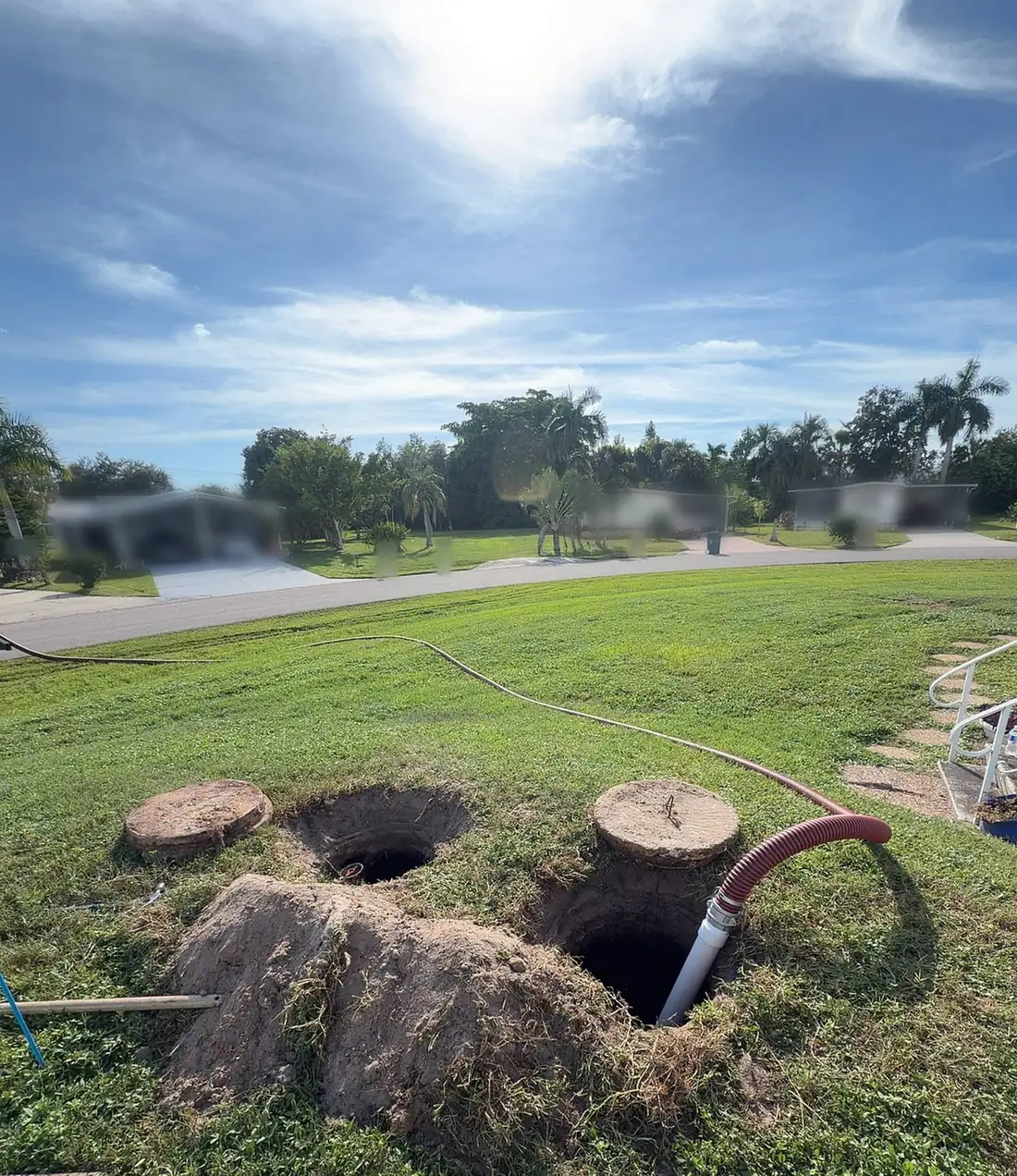
On a big lot it's easy to lose track. Check your septic permit drawing, or ask us to locate it. If we need to dig, we'll quote that first. A riser that brings the lid to ground level saves time on every future visit.
Before the rainy season and storms
A tank pumped in spring has the most room when June rains raise the water table. If a storm floods the yard, cut water use and don't pump until the ground drains; pumping a tank in saturated soil can make it shift or float (EPA).
Questions
How often should an Estates home pump?
The EPA's general guidance is every 3 to 5 years for most homes. Larger households, garbage disposals and heavy guest use shorten that.
Where do I find my septic permit?
Septic permits in Collier County go through the Florida Department of Health in Collier County, which still handles local septic permitting and inspections.
Ready when your tank is.
Open 24 hours for backups. For routine pumping, send a request and we'll confirm a time with you.