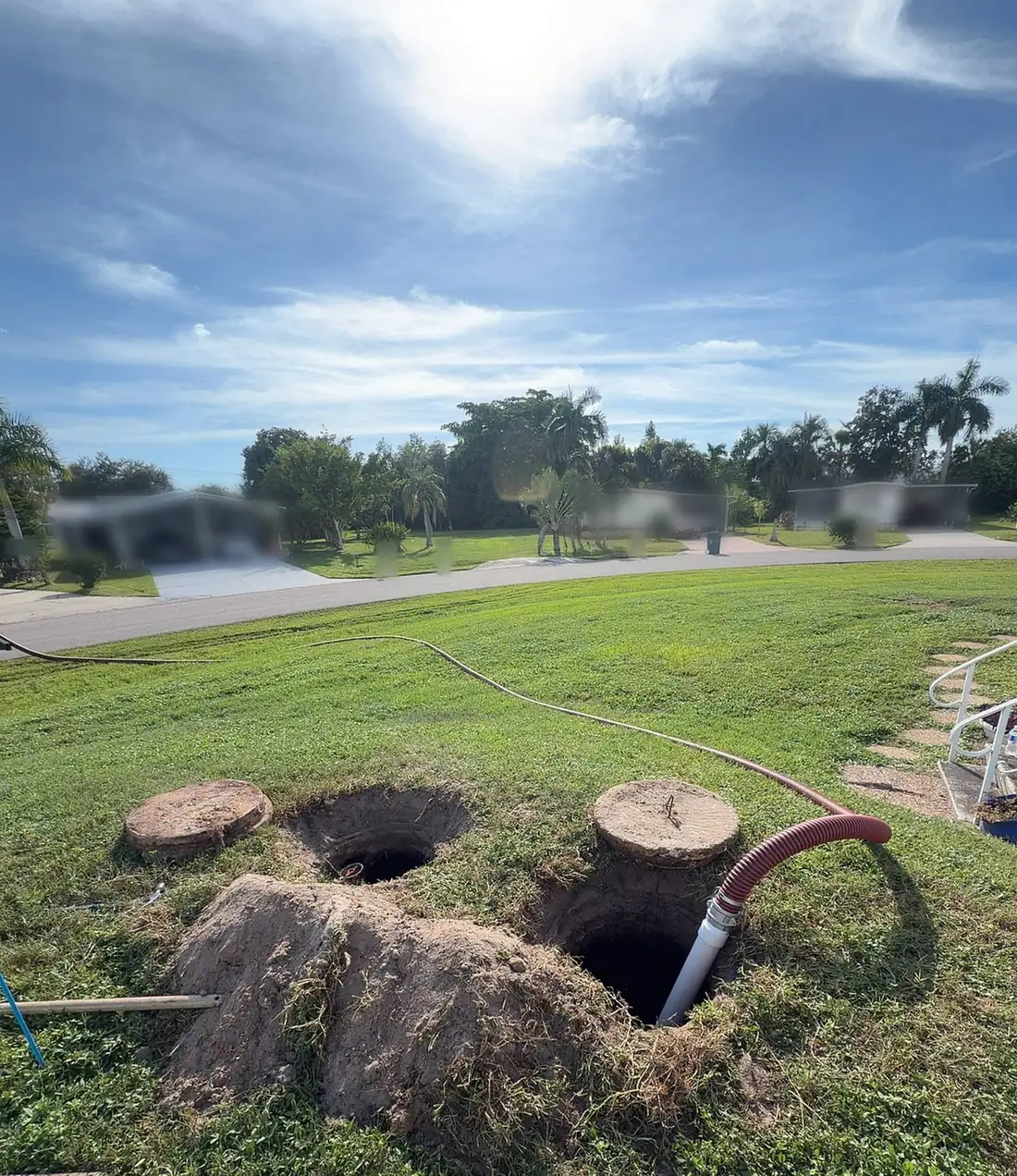
Storms & season
How does South Florida’s rainy season affect a septic system?
A high water table leaves the drain field less room to work. Slow drains and soggy laterals show up more often after a string of summer storms — especially on low or poorly drained lots.
Why do septic problems show up in the rainy season?
The drain field needs unsaturated soil to finish treating effluent. When summer rains raise the water table, that soil has less capacity, and a tank that is already heavy with sludge has less reserve. Slow drains, odors, and wet spots over the laterals are more common after a series of storms. Pumping will not lower the water table, but it can take a full tank out of the picture.
Southwest Florida’s wet months typically run from about May through October, with hurricane season overlapping June 1 to November 301. We will not invent a rainfall statistic for Collier County on this page. What we can say from how these systems work is straightforward: a saturated yard is a stressed drain field.
What you can do during a wet stretch
- Spread laundry and showers out. The EPA warns that doing all the wash in one day can flood a field even in dry weather2.
- Stay off the laterals with cars, mowers if the ground is soft, and new landscaping piles.
- If the tank is due, pump it before the wettest weeks if you can. See how often to pump.
When the yard stays wet
If only the area over the field is soggy after the rest of the lawn has dried, treat it as a warning. If the whole neighborhood is standing in water, give it time to drop, and avoid using the system hard until it does. For a backup after a storm, see backups after heavy rain.
Related
Questions
Should I pump every spring?
It is a sensible habit if you are already in the 3-to-5-year window or you host a full house in winter. It is not a published county deadline.
Ready when your tank is.
Open 24 hours for backups. For routine pumping, send a request and we'll confirm a time with you.